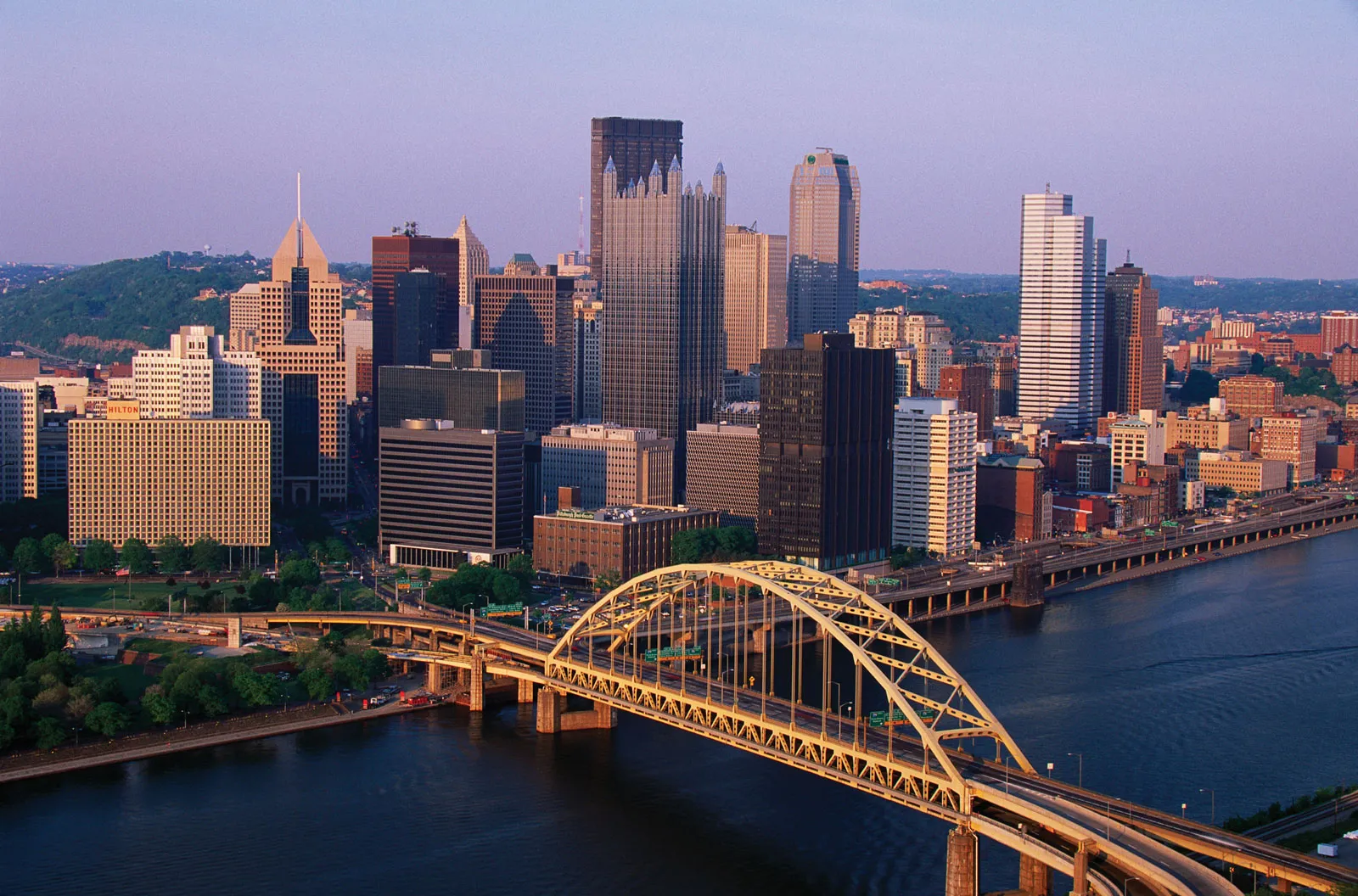
Scranton was built on anthracite coal, and the city's identity still runs through Steamtown and the old rail yards downtown, but the real growth engine of the last decade has been the logistics boom running along the I-81 corridor into the Lackawanna Valley.
Coal-Era Downtown, Warehouse-Era Suburbs
Downtown Scranton's office and retail buildings largely date to the anthracite boom of the late nineteenth and early twentieth century, and a number of former office towers have been converted or partially converted to residential units as the University of Scranton and regional healthcare employers keep downtown demand alive.
Outside downtown, the story is entirely different. The I-81, I-84, and I-380 interchange has pulled in a wave of modern distribution and fulfillment centers, drawn by Scranton's position between New York, Philadelphia, and the Midwest, and that new industrial stock looks and performs nothing like the century-old buildings a few miles away.
Steamtown National Historic Site and the surrounding rail yard redevelopment have given downtown a modest tourism draw as well, though it functions more as a civic and cultural anchor than a major driver of commercial rents.
Property Types Across Two Very Different Eras
Replacement candidates split cleanly into two groups: legacy assets, including downtown office-to-residential conversions, mixed use buildings, and small medical office tied to the hospital systems, and modern assets, primarily logistics and light industrial space near the interstate interchanges. Self-storage and workforce multifamily fill in around both.
Neighboring boroughs such as Dickson City and Dunmore add a middle tier of retail and light industrial property that is neither fully legacy nor purpose-built modern, often occupying buildings from the mid-twentieth century that have been renovated once but not fully modernized.
Why Building Vintage Changes the Utility Conversation Entirely
A new distribution building near the I-81 interchange is built to current energy code, with insulated tilt-up walls, modern roofing, and efficient lighting and HVAC systems, which shows up directly in a predictable, low operating expense ratio. A downtown anthracite-era office building is the opposite case: masonry walls without cavity insulation, older boilers, and windows that have rarely been upgraded floor by floor.
Neither building type is automatically the better replacement choice. The point is that an exchanger comparing a downtown Scranton conversion to a suburban logistics building needs to model utility and capital costs separately for each, rather than applying one set of assumptions across a market that actually contains two distinct building generations.
Corridors and Anchors Shaping the Search
I-81, I-380, I-84, downtown around Steamtown, and the logistics parks spreading out from Montage Mountain Road and the Lackawanna County interchanges are the reference points for most Scranton searches.
- a growing northeastern Pennsylvania logistics hub
- interstate access at the I-81/84/380 junction
- University of Scranton and regional healthcare anchors
- legacy anthracite-era downtown buildings
- downtown office-to-residential conversions
- workforce housing tied to both legacy and logistics employment
Coordinating Identification Across Two Asset Generations
Because Scranton's downtown and its I-81 corridor behave like separate submarkets, exchangers who want optionality often identify one candidate from each, a legacy downtown conversion and a modern logistics building, giving the qualified intermediary and lender two genuinely different risk profiles to evaluate before the 45-day deadline forces a decision.
Lenders active in the region tend to specialize in one asset generation or the other, so confirming which lenders regularly finance downtown conversions versus new logistics construction before finalizing an identification can prevent a late scramble to find financing on the property that actually gets selected.
A Practical Scranton Exchange Brief
A usable Scranton exchange brief should connect local property facts to the owner's full transaction. Record the relinquished property's ownership, qualifying use, contract status, expected sale date, estimated net equity, current debt, income profile, deferred maintenance, and management burden. Then state what the replacement must accomplish: continued control, fewer operating duties, different geographic exposure, a particular income objective, or a credible path to closing within the exchange period.
The market issues discussed on this Scranton page should travel with that brief rather than sit in a separate search file. In particular, coal-era downtown, warehouse-era suburbs, property types across two very different eras, why building vintage changes the utility conversation entirely, and corridors and anchors shaping the search can affect pricing, diligence, financing, and backup-property decisions. Sharing those points with the independent qualified intermediary, CPA, counsel, brokers, lender, and closing team helps each professional respond to the same transaction facts.
- Confirm the sale date and every deadline already in motion.
- Write down the replacement property's required income, debt, control, and workload.
- Keep primary and backup choices subject to the same diligence standards.
- Assign each unresolved tax, legal, financing, title, property, or offering question to the appropriate professional.
Common 1031 Exchange Questions
Why does Scranton have such different building types within a few miles of each other?
Downtown Scranton was built during the anthracite coal boom over a century ago, while the area around the I-81, I-84, and I-380 interchange has grown rapidly in the last decade as a logistics hub. Those two eras produced buildings with very different construction standards and operating profiles.
Is a downtown Scranton office conversion a good 1031 replacement property?
It can be, particularly given University of Scranton and healthcare-driven demand, but older masonry construction and aging mechanical systems mean utility costs and capital reserves need honest modeling separate from a rent roll that may look attractive on paper.
What is driving industrial demand in the Scranton area?
The I-81, I-84, and I-380 interchange positions the region between New York, Philadelphia, and Midwest markets, which has drawn a wave of modern distribution and fulfillment center development built to current energy and construction standards.
How should I structure my identification list given Scranton's two distinct submarkets?
Many exchangers identify one candidate from the legacy downtown stock and one from the modern logistics corridor, giving their qualified intermediary and lender two clearly different risk profiles to evaluate before the 45-day window closes.
What about properties in surrounding boroughs like Dickson City or Dunmore?
These areas often contain a middle tier of mid-twentieth-century retail and light industrial buildings that have been partially renovated. They can offer a reasonable balance between downtown Scranton's older stock and the fully modern construction found directly at the interstate interchanges.
Do different lenders specialize in Scranton's legacy versus modern building stock?
Often yes. Some regional lenders focus on financing new logistics construction near the interstate interchanges, while others are more comfortable underwriting downtown adaptive-reuse conversions. Confirming lender fit for the specific building type early avoids a late financing scramble.
What role does the qualified intermediary play once a Scranton property is under contract?
The qualified intermediary holds the exchange proceeds and facilitates the transfer of both the relinquished and replacement property so the investor never takes actual or constructive receipt of the funds. Coordinate closing timing with the QI as soon as a Scranton property goes under contract, not after.